Ukiyo-e
1603 – 1868
Pictures of the floating world - the woodblock art of Edo Japan
Ukiyo-e, meaning "pictures of the floating world," is a genre of Japanese art that flourished from the 17th through the 19th centuries, most famously in the form of color woodblock prints. The term ukiyo originally carried a Buddhist sense of the sorrowful, transient world, but in the pleasure-loving culture of Edo (modern Tokyo) it was reinterpreted as the "floating world"-the fleeting realm of urban leisure, theater, fashion, and the licensed pleasure quarters. The art form emerged alongside the rise of the chonin, the prosperous merchant and artisan class whose tastes it served.
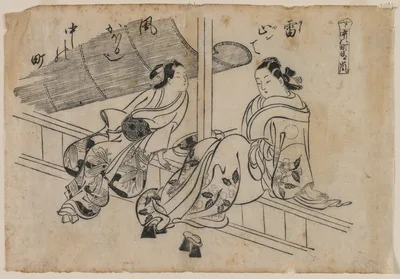
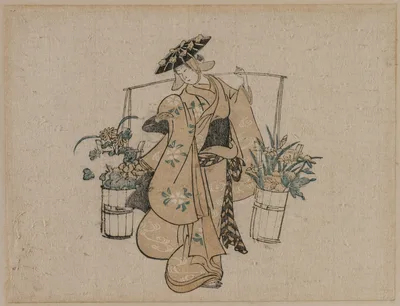
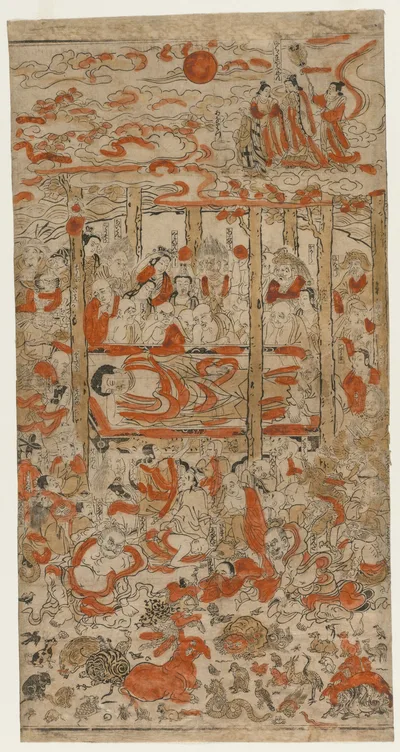
The roots of ukiyo-e lie in the paintings and printed book illustrations of the early Edo period. The painter and illustrator Hishikawa Moronobu (c. 1618-1694) is widely regarded as the first great master and consolidator of the form, producing single-sheet prints and illustrated books in the late 17th century. Early prints were printed only in black ink (sumizuri-e), sometimes colored by hand. Over the following decades printers added color, first by hand and then from additional carved blocks in limited palettes.
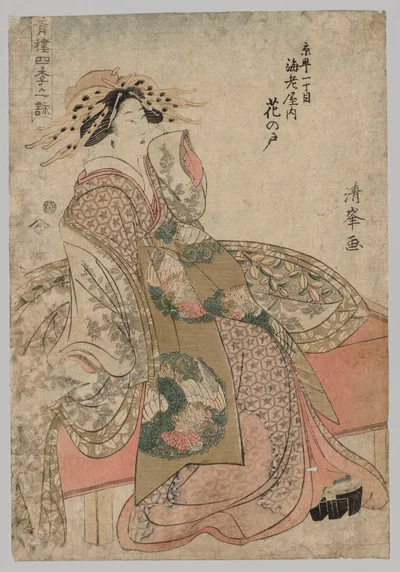
The decisive technical breakthrough came around 1765, when Suzuki Harunobu (c. 1725-1770) and his collaborators perfected the full-color print, known as nishiki-e or "brocade picture." Using multiple precisely registered woodblocks, nishiki-e could combine many colors on a single sheet, and the new richness transformed the market. The late 18th century became a golden age of figure prints: Kitagawa Utamaro (c. 1753-1806) raised the portrayal of beautiful women (bijin-ga) to its height, while the mysterious Toshusai Sharaku, active for only about ten months in 1794-1795, produced strikingly bold portraits of kabuki actors.
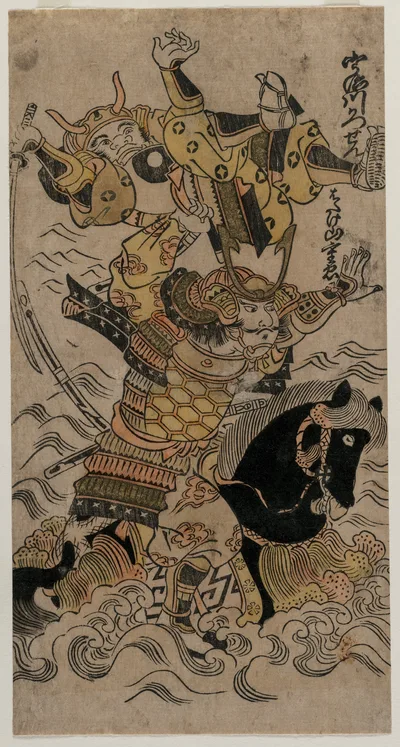
The early 19th century brought the great age of the landscape print. Katsushika Hokusai (1760-1849), an artist of restless invention, published his series Thirty-six Views of Mount Fuji around 1830-1832, including the image now known across the world as The Great Wave. Utagawa Hiroshige (1797-1858) followed with lyrical travel and city landscapes, among them The Fifty-three Stations of the Tokaido and One Hundred Famous Views of Edo. The Utagawa school, which also produced the inventive warrior- and history-print master Utagawa Kuniyoshi (1798-1861), came to dominate the trade.
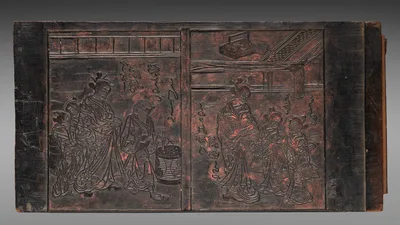
The prints were never the work of a single hand. They were produced through a collaborative workshop system overseen by a publisher (hanmoto), who commissioned a designing artist (eshi), a block carver (horishi), and a printer (surishi). This division of labor allowed prints to be made in large editions and sold cheaply, making art a part of everyday urban life. With the Meiji Restoration of 1868 and Japan's rapid modernization, photography, lithography, and Western pictorial taste eroded the old print trade, and classic ukiyo-e gradually declined-even as the prints themselves were being discovered, and avidly collected, in Europe.
"Living only for the moment, savoring the moon, the snow, the cherry blossoms and the maple leaves, singing songs, drinking sake, and diverting oneself just in floating, floating... this is what we call the floating world."
— Ukiyo-e